
Málaga & Nativity Scenes (Belenes) – 2025
Welcome to Málaga: A City of Light, Tradition, and Art
Originally published November 26th, 2025.
Nestled along Andalusia’s sun-drenched coast, Málaga is a city where ancient history meets modern vibrancy. Known for its Roman theater, Renaissance cathedral, Moorish fortress, and world-renowned museums, Málaga transforms each winter into a warm, festive wonderland.
From late November to early January, the city glows with imaginative holiday lights—especially the famous display on Calle Larios—and hosts a rich lineup of seasonal events. Among these, the tradition of nativity scenes, or belenes, stands out as one of the most beloved and culturally meaningful.
For locals, belenes are not just decorations—they are a cherished art form. Streets, churches, brotherhood houses, cultural centers, and even small neighborhood associations create intricate scenes that reimagine Bethlehem through Andalusian eyes. For travelers, it’s one of the most charming ways to experience the city’s authentic spirit.
Please note: at time of publishing, limited information was available for 2025. As new information comes in, we’ll keep you updated!
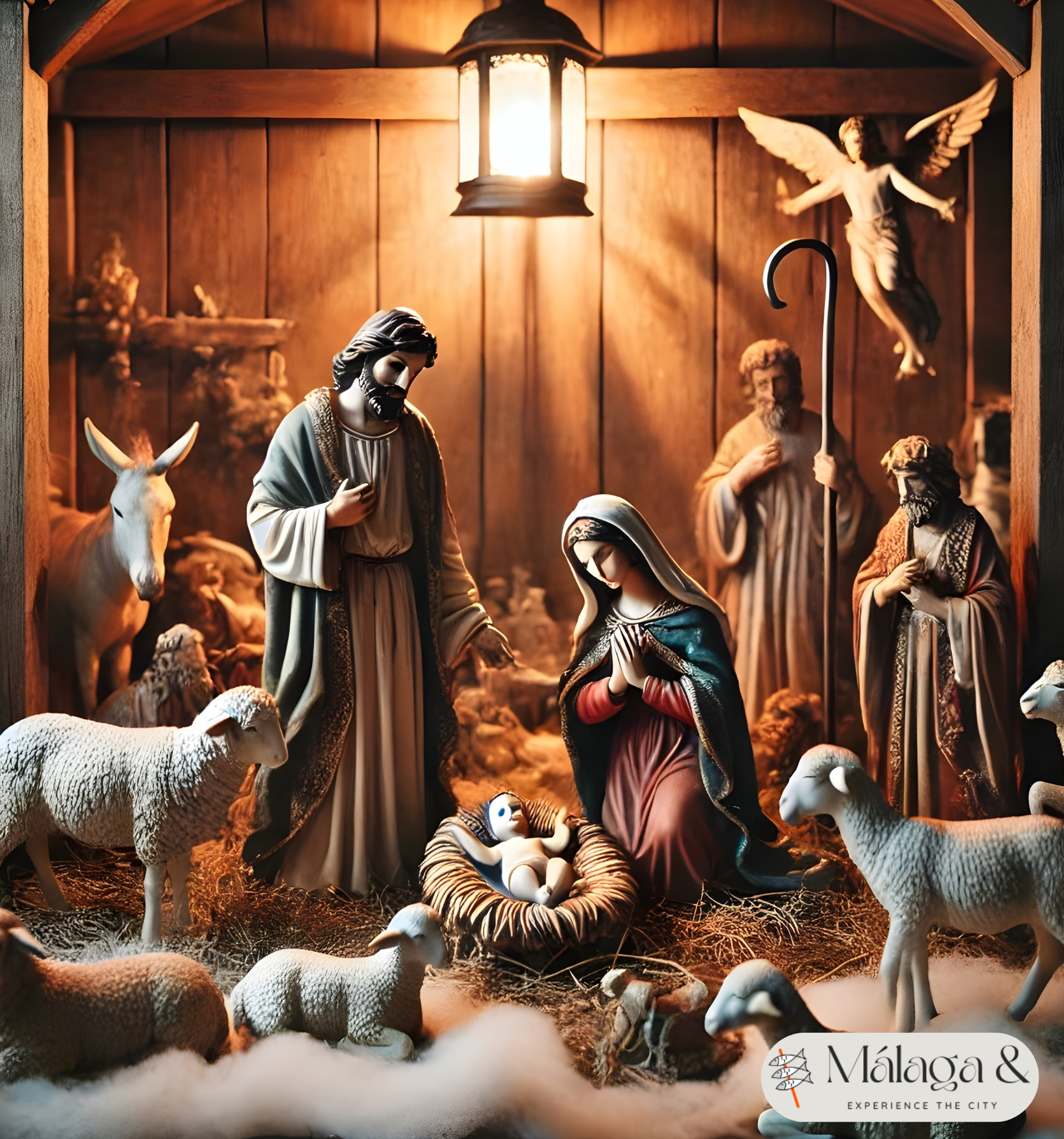
Málaga & a traditional nativity scene.
The Story Behind the Tradition
From Simple Devotion to Elaborate Artistry
The origin of nativity scenes goes back to the 13th century, when St. Francis of Assisi created the first live nativity to bring the Christmas story closer to everyday people. The idea spread rapidly across Europe, and Spain embraced it with particular passion.
Over the centuries, the humble display evolved into a detailed miniature world—complete with artisans, farmers, market stalls, and local architecture. Spanish families began setting up their own belenes, and skilled craftsmen emerged who could sculpt expressive figures or build entire landscapes.
Why Málaga’s Belenes Stand Out
Málaga has long been a center for miniature craftsmanship. Many belenes feature:
Rural Andalusian landscapes
Hand-carved figures (figuras) from local artisans
Moving components like running rivers, working mills, or flickering lanterns
Scenes of everyday village life, echoing Málaga’s traditions
The city’s artistic identity blends seamlessly with the belén art form. Each year, the Ayuntamiento (City Hall), brotherhoods, museums, and cultural institutions unveil nativity scenes that attract both residents and visitors in large numbers.
Exploring Málaga’s Best Nativity Scenes (2025)
Below are the most rewarding routes to help you enjoy the city’s festive displays at your own pace.
Key Locations to Visit
Ayuntamiento de Málaga (City Hall)

Image courtesy of the City Hall website (in Spanish)
One of the largest and most visited belenes in the city. Each year’s display has a unique theme—sometimes traditional, sometimes more artistic. Expect crowds, but also extraordinary craftsmanship.
Dates: From December 6, 2025, to January 6, 2026.
Timetable: From 10:00 a.m. to 2:00 p.m. and from 5:00 p.m. to 9:00 p.m. Location: Avenida de Cervantes, 4
Cathedral of Málaga
The cathedral’s nativity scene is steeped in tradition. Its elegant figures and sacred atmosphere make it one of the most moving displays in the city. The Malaga Cathedral will host a monumental Nativity scene (Belen) for the 2025 Christmas season, managed by the Asociación Belenista La Alcazaba. This is one of many notable Nativity scenes to visit in Malaga during Christmas 2025, which will also feature a new video mapping show with the theme "The Fisherman of Dreams" on the Cathedral's facade from November 29, 2025, to January 4, 2026.
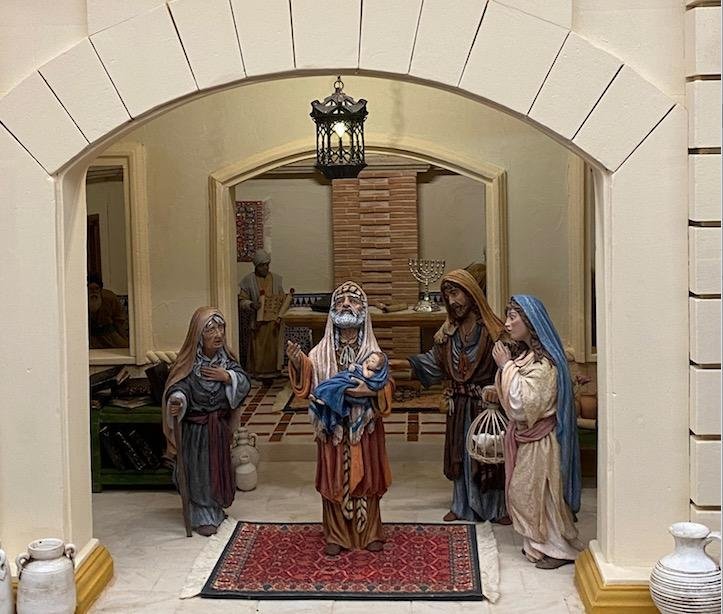
Image courtesy of Diócesis Málaga website. (In Spanish)
Location: The monumental nativity scene is set up in the cathedral's trascoro (behind the choir stalls), with entry from the Plaza del Obispo. Hours: Based on the previous year's schedule, you can likely visit during the morning and afternoon, with a midday closure. For example, the 2024–2025 hours were 10:00 to 14:00 and 17:00 to 21:00. Special closures: The nativity scene is typically closed on the afternoons of December 24, 31, and January 5, and in the mornings of December 25, January 1, and January 6. Admission: The nativity scene is free to visit.
Museo de Artes y Costumbres Populares
Fundación Unicaja presents a handcrafted Nativity scene by artisan Enrique Haro at the Museo Fundación Unicaja (website in Spanish) de Artes y Costumbres Populares, on display until January 11, 2026. The 100 x 200 cm scene features the Nativity, the Three Wise Men’s procession, and the Annunciation, set within environments inspired by the Nazareth of Jesus. Figures range from 5 to 11 cm, created using mixed techniques with both traditional and modern materials.
Timetable: Monday–Sunday: 10:00–14:00 and 16:00–19:00, Holidays: 10:00–14:00 Location: Museo Fundación Unicaja de Artes y Costumbres Populares
Admission: Free until full capacity is reached.
Brotherhoods (Cofradías)
Many religious brotherhoods create extraordinary nativity scenes with moving figures, dramatic lighting, or thematic interpretations.
Some of the most noteworthy often include:
Cofradía de Estudiantes: An Andalusian costumbrista-style Nativity scene about 20 meters long, created by the Málaga Nativity Scene Association.
Hermandad del Sepulcro: Displays its traditional Nativity scene in its facilities.
Congregación de Mena: The brotherhood has its own Nativity scene open to the public.
Hermandad La Cena: Also exhibits its Christmas Nativity scene for visitors.
Suggested Route
Half-Day Walking Route (Perfect for First-Time Visitors)
Start at Ayuntamiento de Málaga, exploring its grand belén.
Stroll to the Cathedral for its traditional display.
Cross to the Bishop’s Palace, just steps away.
Walk along Calle Larios—a spectacle of Christmas lights.
Visit nearby brotherhood houses for more intimate belenes.
End at the Museo de Artes y Costumbres Populares, discovering rural Andalusian life.
Practical Tips for an Enjoyable Visit
Best Times to Visit
Late November – Early January: Most belenes are open.
Mid-December – January 6: Peak season with the fullest lineup of displays.
Early mornings & weekdays: Best for avoiding crowds at major locations.
Málaga’s weather this time of year is mild, so walking routes are comfortable.
Cultural Etiquette
Speak softly in churches and cofradía houses.
Do not touch the figures or dioramas.
Photography is usually allowed—avoid flash unless permitted.
Respect queues; many displays become very popular during weekends.
Now you’ve seen Malaga & Nativity scenes, check out our Malaga & Tapas Tour!